Hengshui Mingwei Technology Co., Ltd.
The Top 10 Advantages of Fiberglass (FRP)
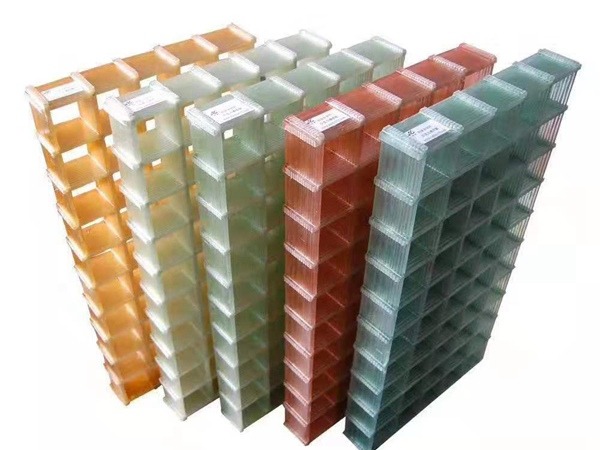
1. Corrosion Resistance and Pollution-Free Nature
Fiberglass pipes are capable of withstanding erosion from acids, alkalis, salts, seawater, untreated sewage, corrosive soils or groundwater, and numerous chemical fluids. These pipes possess excellent characteristics—being non-toxic, rust-free, odorless, and free from secondary contamination of water quality—and require no additional anti-corrosion treatment; consequently, they are widely utilized in the water supply and drainage industries.
2. Anti-Fouling and Anti-Boring Properties
The pipe surface is coated with unsaturated polyester resin, resulting in a clean and smooth finish. This prevents fouling and attachment by marine organisms, fungi, and other microorganisms found in seawater or sewage—issues that would otherwise increase surface roughness, reduce the effective flow cross-section, and drive up maintenance costs. Free from such contamination, the pipes remain as clean as new even after prolonged use.
3. Heat and Freeze Resistance
Even at temperatures as low as -30°C, the pipes retain excellent toughness and exceptionally high strength. They can be used continuously within a temperature range of -50°C to 80°C; furthermore, by utilizing specially formulated resins, they can operate effectively at temperatures exceeding 110°C.
4. Lightweight, High Strength, and Convenient Transport and Installation
Fiberglass pipes produced via the filament winding process have a specific gravity ranging from 1.65 to 2.0—only one-quarter that of steel. However, their hoop (circumferential) tensile strength ranges from 180 to 300 MPa, and their axial tensile strength ranges from 60 to 150 MPa—values comparable to those of alloy steel. Consequently, their specific strength (strength-to-weight ratio) is two to three times that of alloy steel, allowing them to be custom-designed to meet diverse internal and external pressure requirements based on specific user needs. For pipes of the same diameter, the unit weight of a fiberglass pipe is only about 1/2.5 that of a carbon steel pipe (rolled steel plate pipe), 1/3.5 that of a cast iron pipe, and approximately 1/8 that of a prestressed reinforced concrete pipe. This makes both transportation and installation extremely convenient. Furthermore, with each section of fiberglass pipe measuring 12 meters in length, the number of required pipe joints is reduced by two-thirds compared to concrete pipes. Its socket-and-spigot connection method ensures quick and easy installation, while simultaneously reducing hoisting costs and significantly accelerating the overall installation speed.
5. Low Frictional Resistance and High Conveying Capacity
The inner wall of FRP (Fiber Reinforced Polymer) pipes is exceptionally smooth, resulting in very low roughness and frictional resistance. The roughness coefficient is 0.0084—compared to an n-value of 0.014 for concrete pipes and 0.013 for cast iron pipes—meaning FRP pipes can significantly reduce fluid pressure loss along the flow path and enhance conveying capacity. Consequently, this yields substantial economic benefits: for a given conveying capacity, projects can utilize FRP pipes with a smaller inner diameter, thereby reducing initial capital investment; alternatively, when using pipes of the same inner diameter, FRP pipes incur less head loss than pipes made of other materials, resulting in savings on pumping costs. Furthermore, FRP pipes can reduce pumping duration and lower long-term operational expenses.
6. Excellent Electrical and Thermal Insulation Properties
FRP is a non-conductor, endowing the pipes with exceptional electrical insulation properties; their insulation resistance falls within the range of 10¹² to 10¹⁵ Ω·cm. This makes them ideally suited for use in areas with high concentrations of power transmission and telecommunication lines, as well as in regions prone to frequent lightning strikes. Additionally, FRP possesses a very low thermal conductivity coefficient—only 0.23, which is merely 0.5% (five-thousandths) that of steel—resulting in excellent thermal insulation performance for the pipes.
7. Good Abrasion Resistance
A comparative rotary abrasion test was conducted by filling various pipes with water containing a high concentration of mud and sand. After 3 million rotation cycles, the wear depth on the inner walls of the pipes was measured as follows: 0.53 mm for steel pipes coated with tar and enamel; 0.52 mm for steel pipes coated with epoxy resin and tar; and 0.21 mm for FRP pipes (compared to surface-hardened steel pipes). These results demonstrate the superior abrasion resistance of FRP pipes. 8. Low Maintenance Costs
Due to the aforementioned properties—including resistance to corrosion, abrasion, freezing, and fouling—FRP pipes require no additional engineering measures such as rustproofing, anti-fouling treatments, insulation, or thermal lagging, nor do they require routine overhauls. Buried pipes, in particular, require no cathodic protection, thereby reducing project maintenance costs by over 70%.
9. Excellent Design Flexibility
FRP pipes can be custom-designed and manufactured to meet a wide range of specific user requirements—such as varying flow rates, pressure levels, burial depths, and load conditions—resulting in pipes with distinct pressure and stiffness ratings.
10. Long Service Life and Superior Overall Economic Benefits
Laboratory simulation tests indicate that the service life of FRP pipelines can exceed 50 years. "Overall economic benefits" refers to the long-term value derived from a combination of factors, including initial construction investment, installation and maintenance costs, service longevity, and material conservation (e.g., steel savings). The overall economic benefits of FRP pipelines are highly favorable; notably, the larger the pipe diameter, the lower the relative cost. When further considering that buried pipelines enjoy an extended service life and require no annual maintenance, their overall economic benefits are truly exceptional.
Contact
Reach out for inquiries or support anytime.
Phone
+86 187 3080 9718
© 2025. All rights reserved.